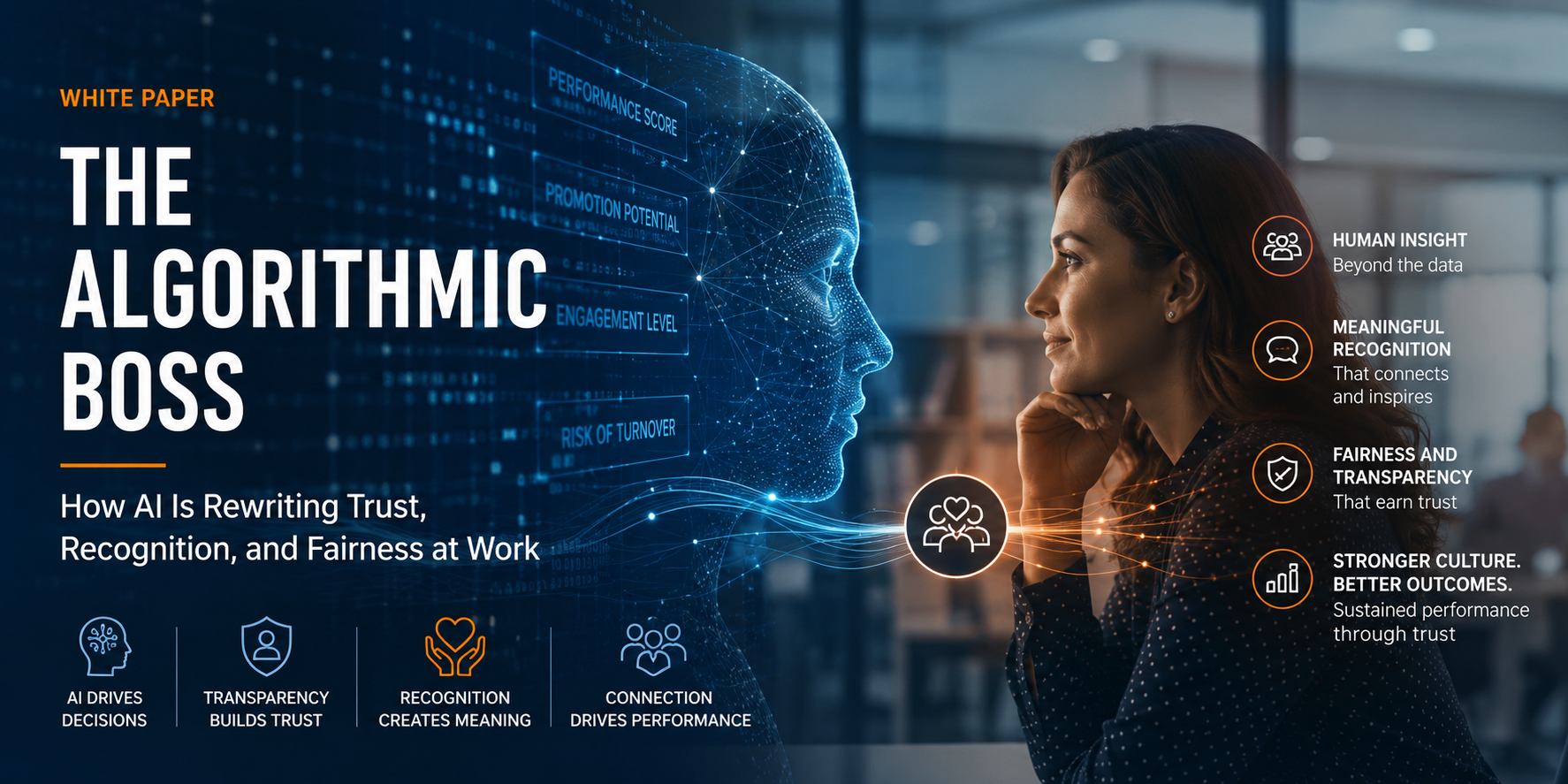

How AI Is Rewriting Trust, Recognition, and Fairness at Work
I. The Rise of Invisible Management
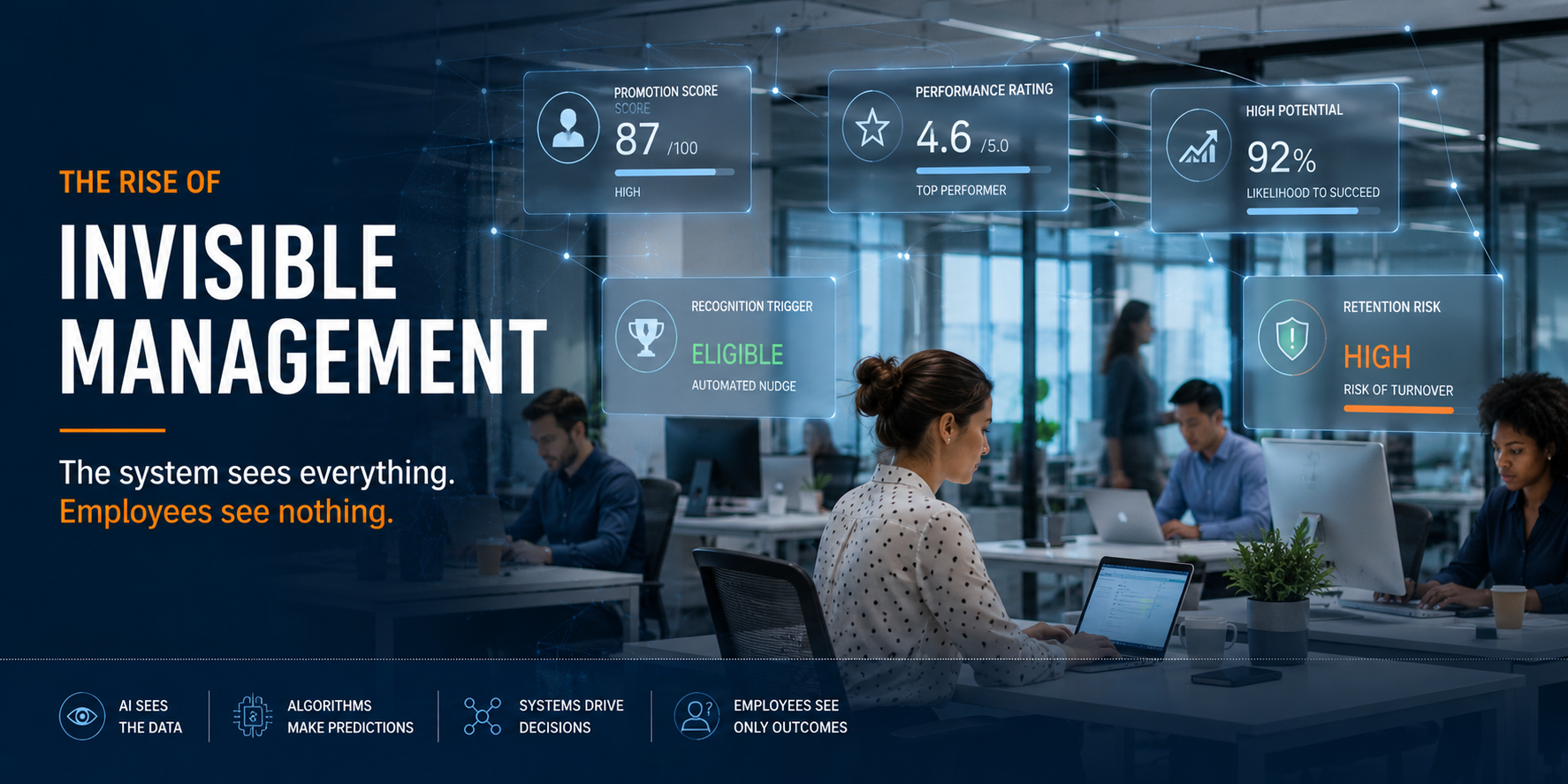
Work is entering a new phase — one that most organizations have already stepped into, but few have fully acknowledged. Decisions that once lived in conversations are now increasingly shaped by systems.
-
Who gets promoted.
-
Who gets recognized.
-
Who is seen as high potential.
-
Who is quietly falling behind.
These outcomes are no longer driven solely by managers. They are influenced — and in some cases determined — by algorithms.
Performance scores are calculated using predictive models. Scheduling is optimized by AI-driven systems. Recognition is triggered through automated nudges and workflows. Career mobility is guided by data signals employees may never see. This shift isn’t theoretical. It’s already happening.
According to a 2024 Gartner report, more than 50% of large organizations now use AI in at least one core HR or talent decision process. McKinsey estimates that AI-driven decision-making in workforce management will double over the next three years.
But while adoption is accelerating, understanding is not. Employees don’t experience algorithms. They experience outcomes. And when those outcomes lack explanation, something critical begins to erode: Trust.
“The biggest risk with AI in the workplace is not the technology itself — it’s the loss of transparency around how decisions are made.”
— Harvard Business Review
For decades, employees have understood how decisions were made — even when they disagreed with them. A manager could explain. A leader could provide context. A conversation could restore clarity. Now, decisions increasingly come from systems that don’t explain themselves. Management is no longer just a person. It’s a system.
And when systems replace visibility with opacity, employees begin to question not just decisions — but the integrity of the environment itself. This is the beginning of a new workplace challenge: Not performance risk. Not engagement risk. Trust risk.